
BeVision D3
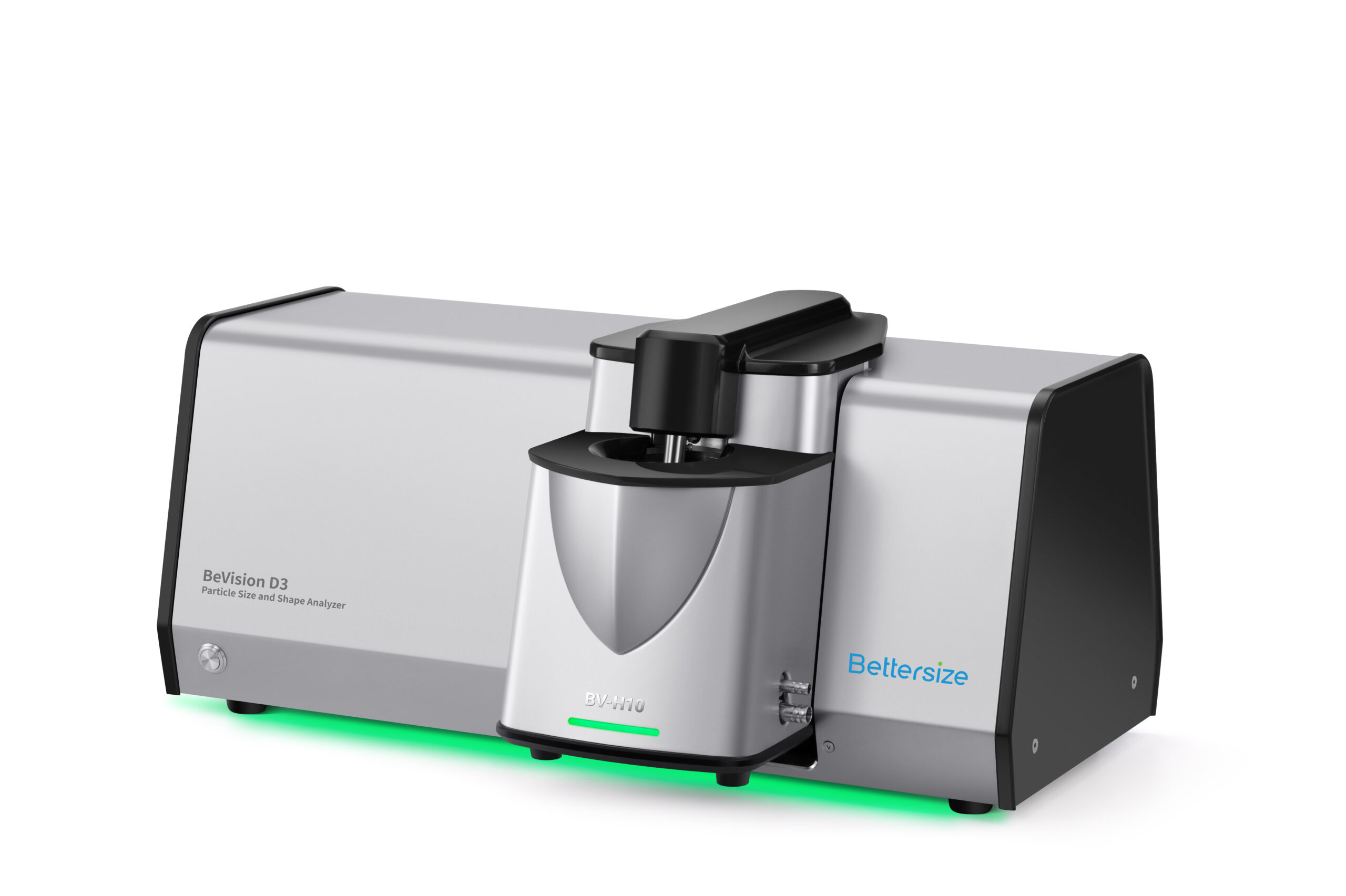
The BeVision D3 Series Particle Size and Shape Analyzer is an advanced, fully automated analyzer based on Dynamic Image Analysis (DIA) technology. It delivers highly accurate particle size and shape characterization, making it an ideal solution for both research and quality control applications.
Features and Benefits
- Wide measuring range: 0.5 μm – 26 mm
- 37+ different particle size and shape parameters
- High efficiency with a typical test time of ~3 minutes
- Ultra-high resolution for narrow particle size distributions
- Compliance with ISO 13322-2 and ISO 9276
- Fully automated operation
- Powerful software provides a comprehensive evaluation
- Results fully comparable with sieve analysis
Features
BeVision D3 Series
Particle Size and Shape Analyzer
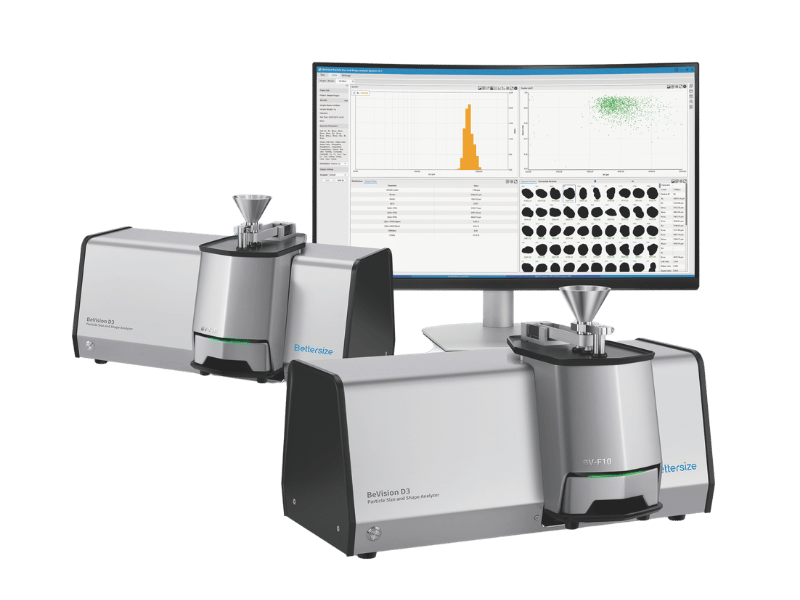
The BeVision D3 Series Particle Size and Shape Analyzer is an advanced, fully automated analyzer based on Dynamic Image Analysis (DIA) technology. It delivers highly accurate particle size and shape characterization, making it an ideal solution for both research and quality control applications.
 |
Wide Measurement Range
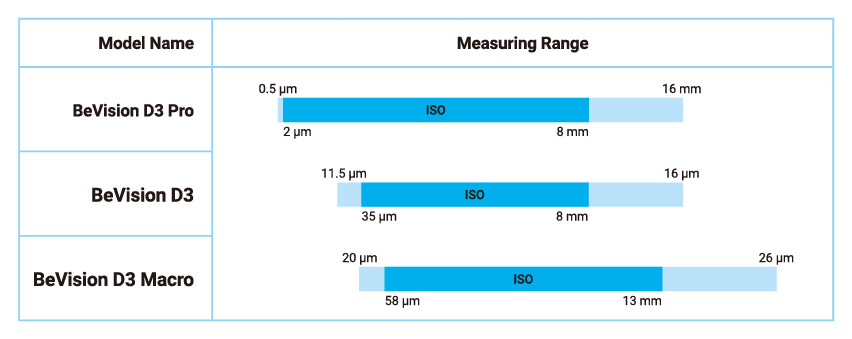
The BeVision D3 Series covers a broad measurement range from 0.5 μm to 26 mm. Its innovative dual-CMOS camera system simultaneously captures coarse and fine particles, enabling complete characterization of wide particle size distributions in a single measurement.
Seamless Replacement for Sieve Analysis
The built-in sieve correlation function produces results that are highly consistent with traditional sieve analysis. This allows the BeVision D3 Series to seamlessly replace mechanical sieving, significantly improving efficiency while maintaining trusted comparability.
Comprehensive Particle Morphology Analysis
With more than 37 size and shape parameters, the BeVision D3 Series delivers in-depth insight into particle morphology. It accurately measures key characteristics including length and width, aspect ratio, circularity, compactness and many more. This enables detailed and reliable analysis across all particle types, from granular to elongated and flaky materials.
Fully Automated Workflow
Powered by intuitive and robust BeVision DIA Software, the analyzer features a fully automated workflow that minimizes operator involvement and eliminates human error. Its ease of use and high throughput make it ideal for R&D laboratories and quality control environments in powder and particle-based industries.
Features & Benefits
- Wide measuring range: 0.5 μm – 26 mm
- 37+ parameters for comprehensive size and morphology characterization
- Compliance with ISO 13322-2 and ISO 9276
- Ultra-high resolution for narrow particle size distributions
- Accurate detection of oversize and undersize particles
- Special applications, including mixture analysis, thickness measurement of flaky particles, length and width measurement of elongated particles
- Results fully comparable with sieve analysis
- Standardized test procedure eliminates deviations caused by human error
- Fully automated, easy-to-use operation
- High efficiency with a typical test time of ~3 minutes
- Full sample recovery
- Almost maintenance-free operation
User-Friendly BeVision DIA Software
 |
|
| Multiple Measurement Modes | Comprehensive Measurement Results |
| The BeVision DIA Software supports manual testing, automatic testing, and offline image analysis modes, providing maximum flexibility for a wide range of applications including R&D, routine quality control, and method development. | With 37+ size and shape parameters and multiple data visualization options, the software delivers deep insight into particle characteristics. Users can perform detailed statistics, compare multiple distributions, and achieve high-precision classification of particle populations for thorough and reliable evaluation. |
| Powerful Data Analysis Tools | Flexible Customization |
| The BeVision DIA Software is a robust data analysis platform offering advanced capabilities such as: particle screening and filtering, re-analysis without remeasuring, multi-parameter and multi-result comparison, flexible data export for further analysis | Output formats, calculation parameters and reporting layouts can be customized to match specific application and quality control requirements. Customized settings can be saved as user-defined templates, ensuring consistency and efficiency across routine measurements with different users. |
 |
|||
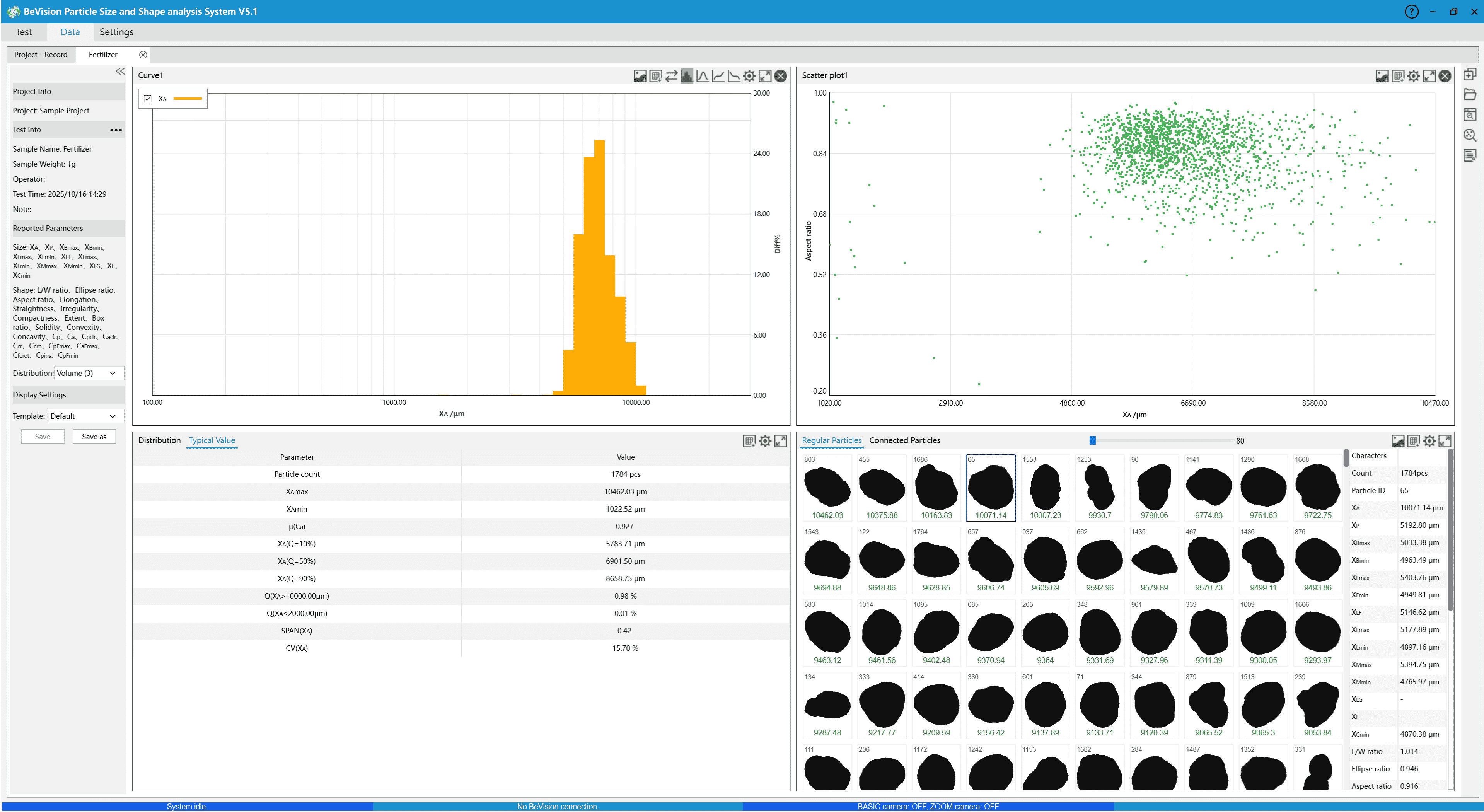
| ① Information Bar Displays essential sample and test information at a glance. Users can freely switch between volume-based, area-based and number-based distributions. |
② Distribution Chart Size or shape distributions are displayed as graphs or histograms. Distribution classification and parameters are fully customizable. |
③ Scatter Plot Evaluate particle populations across two dimensions, typically particle size and shape. This enables intuitive identification of trends, clusters and mixed particle populations. |
④ Function Bar Provides quick access to essential tools, including: add a chart, view raw particle images, re-analyze data, screening and filtering particles, view and export reports. |
| ⑤ Key Statistics Customized key statistics of both size and shape distributions, including mean value, span, D10, D50, D90 and more. |
⑥ Particle Gallery Displays all captured particle images, sortable in ascending or descending order by size or shape parameter. |
⑦ Particle Details Click on any individual particle image to view complete size and shape details for that specific particle. |
|
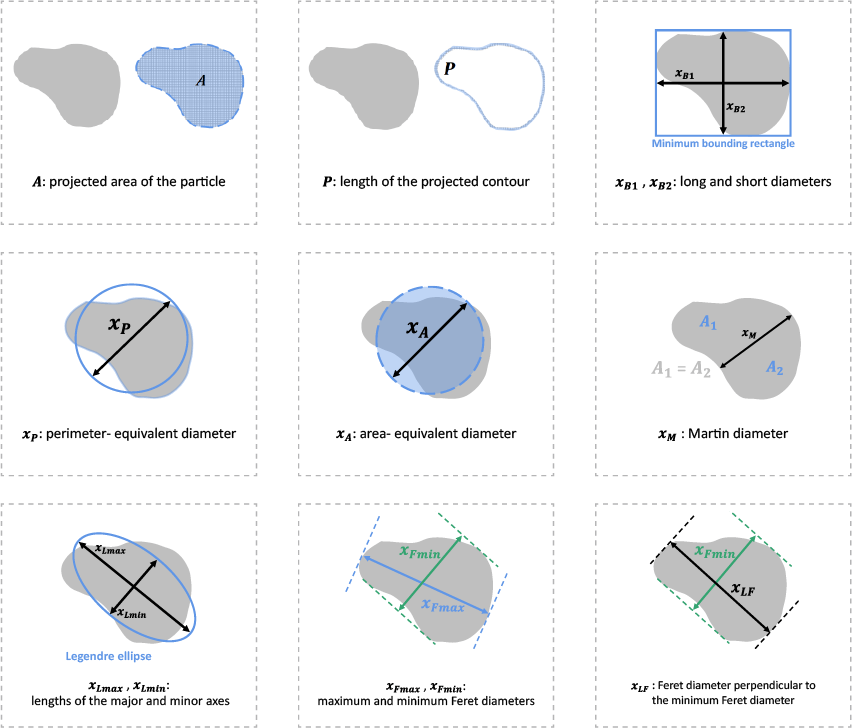
Particle Size and Shape Parameters
| Size Parameters | |||
| Equivalent Diameters Area-equivalent diameter Perimeter-equivalent diameter |
 |
||
| Feret Diameters Maximum Feret diameter Minimum Feret diameter XLF(“Length”) |
|||
| Martin Diameters Maximum Martin diameter Minimum Martin diameter |
|||
| Legendre Ellipse Parameters Major axis Minor axis |
|||
| Additional Size-Related Parameters Geodesic length Thickness Minimum chord length |
|||
| Minimum Bounding Rectangle Diameters Long diameter Short diameter |
|||
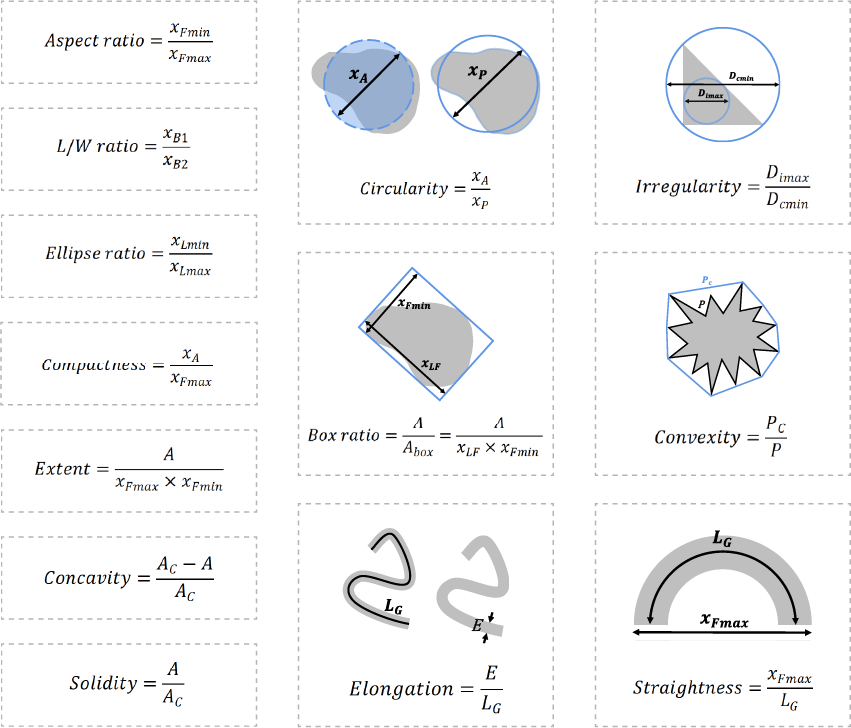
| Shape Parameters | |||
| Size Ratio Parameters (Two-Direction Comparison) Aspect ratio Length-to-width (L/W) ratio Ellipse axis ratio |
 |
||
| Roundness and Rectangularity Circularity (11 algorithms) Irregularity Compactness Extent Box ratio |
|||
| Contour Concavity Parameters Concavity Convexity Solidity |
|||
| Elongated Particle Parameters Elongation Straightness |
|||
Technology
Dynamic Image Analysis (DIA) Technology
The BeVision D3 Series employs advanced Dynamic Image Analysis (DIA) technology to deliver fast, accurate, and reproducible particle size and shape measurements.
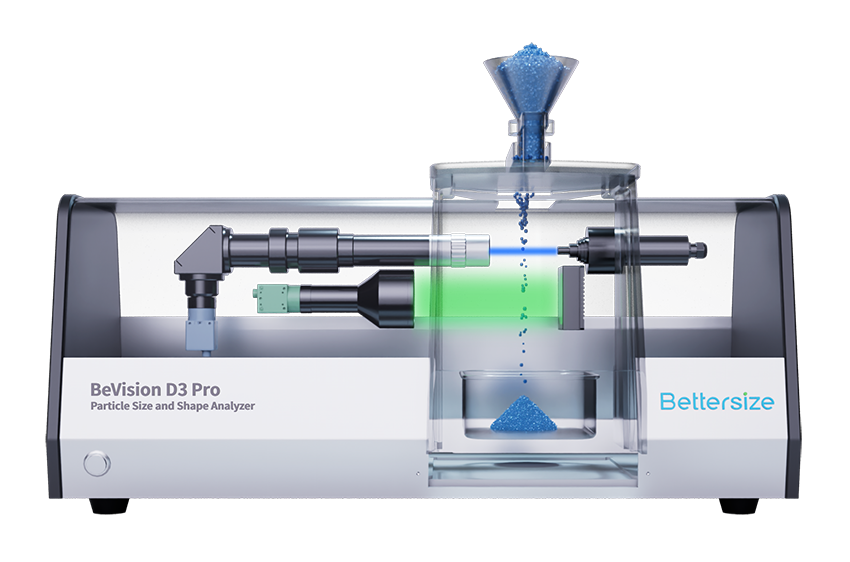
During analysis, dispersed particles pass through a precisely defined detection zone. Uniform background illumination across the entire field of view creates high-contrast particle projections, which are captured in real time by a dual high-speed camera system. One camera focuses on coarse particles, while the other simultaneously captures fine particles, enabling complete size and shape distribution analysis across a wide measurement range in a single run.
Why DIA Method?
Dynamic Image Analysis (DIA) combines the strengths of traditional and modern particle characterization techniques while eliminating their limitations. By analyzing individual particles in motion, DIA delivers accurate, representative, and reproducible results for both particle size and shape—across a wide measurement range.
| Dynamic Image Analysis vs Traditional Methods | |||
| Features | Dynamic Image Analysis | Sieve Analysis | Static Image Analysis |
| Wide measurement range | ●●● | ●● | ●● |
| Repeatability & Reproducibility | ●●● | ●● | ●● |
| High-resolution for narrow distributions | ●●● | ● | ●●● |
| Accuracy for broad distribution | ●●● | ● | ● |
| Representative results | ●●● | ●●● | ● |
| Particle morphology analysis | ●●● | ● | ●●● |
| Comparable with other technologies | ●● | ● | ● |
| Oversize particle detection | ●● | ●●● | ● |
| Individual particle analysis | ●● | ● | ●●● |
| Ease and speed of measurement | ●●● | ● | ● |
Dual-CMOS Camera System
The dual-camera design allows simultaneous measurement of coarse and fine particles. This unique configuration provides comprehensive distribution information for wide-range samples with a single measurement, significantly improving efficiency and data integrity.
5-Megapixel CMOS Camera
Each camera is equipped with a global shutter, enabling sharp, blur-free imaging of fast-moving particles. High pixel resolution ensures precise contour detection and accurate size and shapeanalysis.
Green Parallel Planar Light Source
A uniform green planar light source ensures stable illumination across the entire field of view and consistent gray values in particle images. This simplifies image binarization and enhances measurement accuracy and repeatability.
Blue Light Source for Fine Particles
A dedicated blue light source delivers higherresolution imaging for fine particles, enhancing edge definition and ensuring clear capture of fine particle characteristics.
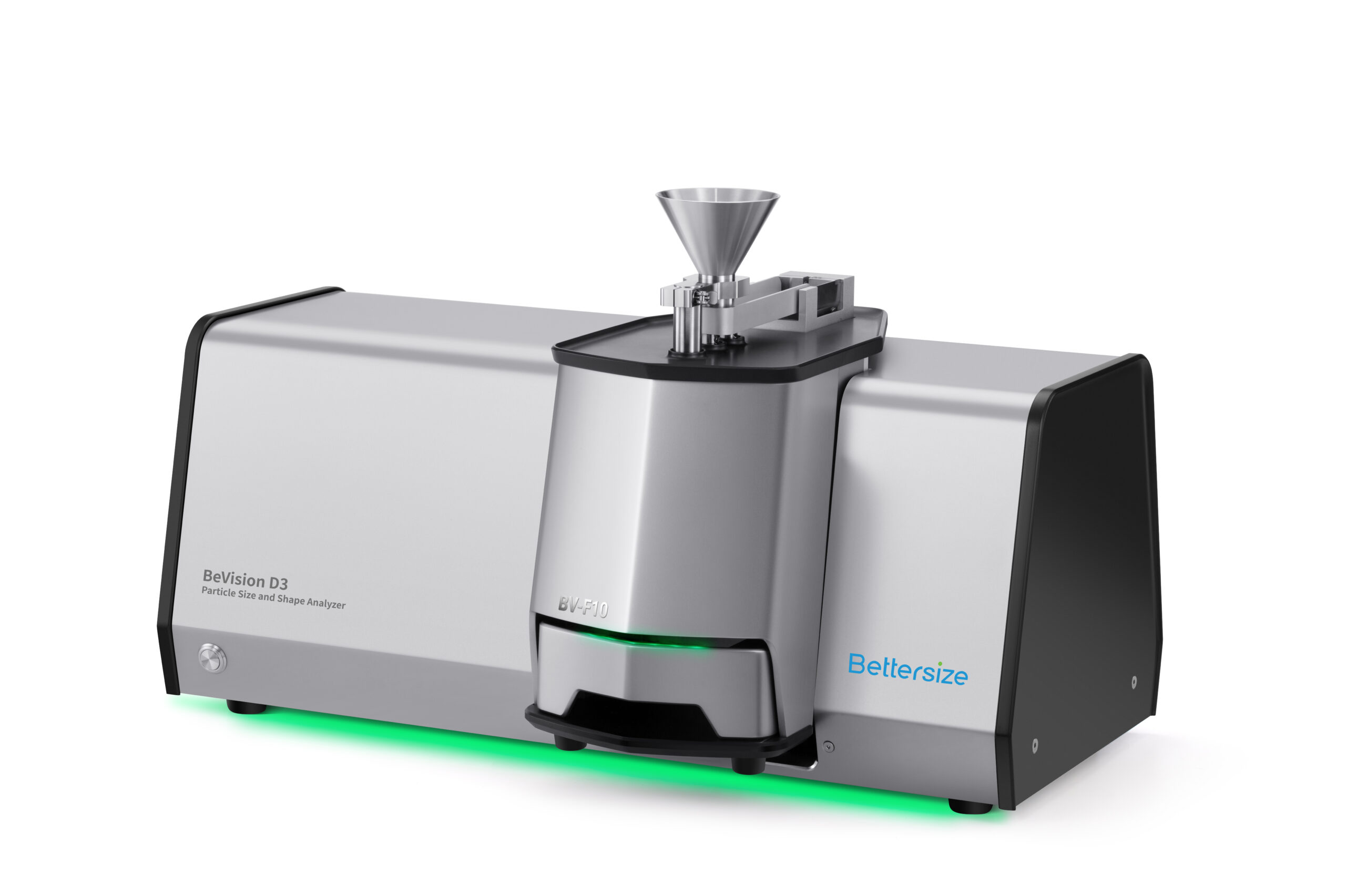
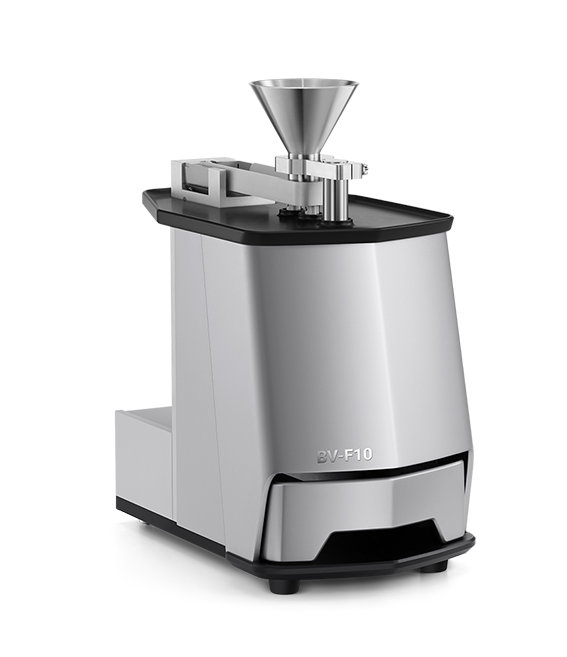
BV-F10 Free Fall Dispersion Unit
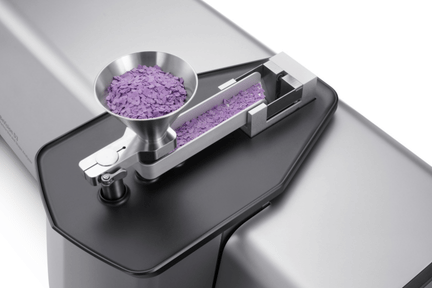
The BV-F10 Free Fall Dispersion Unit features patented dispersion technology designed for uniform and gentle dispersion of freeflowing powders and granules. By leveraging gravity-driven free fall, it ensures highly representative particle presentation without mechanical stress or particle damage.
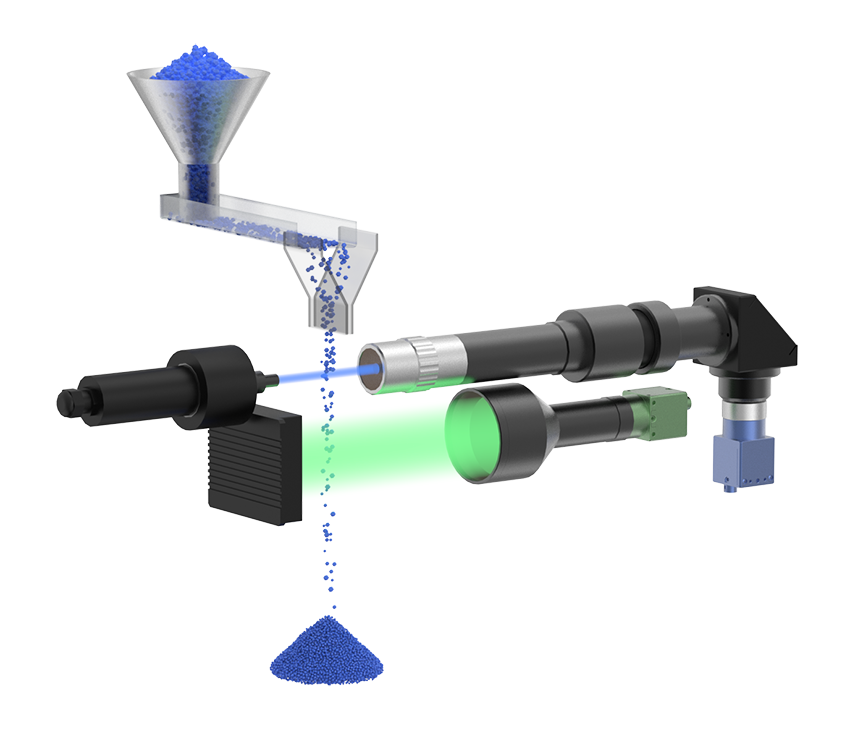 |
Modular & Plug-and-Play DesignThe BV-F10 features a modular, plug-and-play architecture with full software integration. All dispersion parameters are automatically controlled through the system software, enabling fast setup, consistent results, and excellent repeatability. |
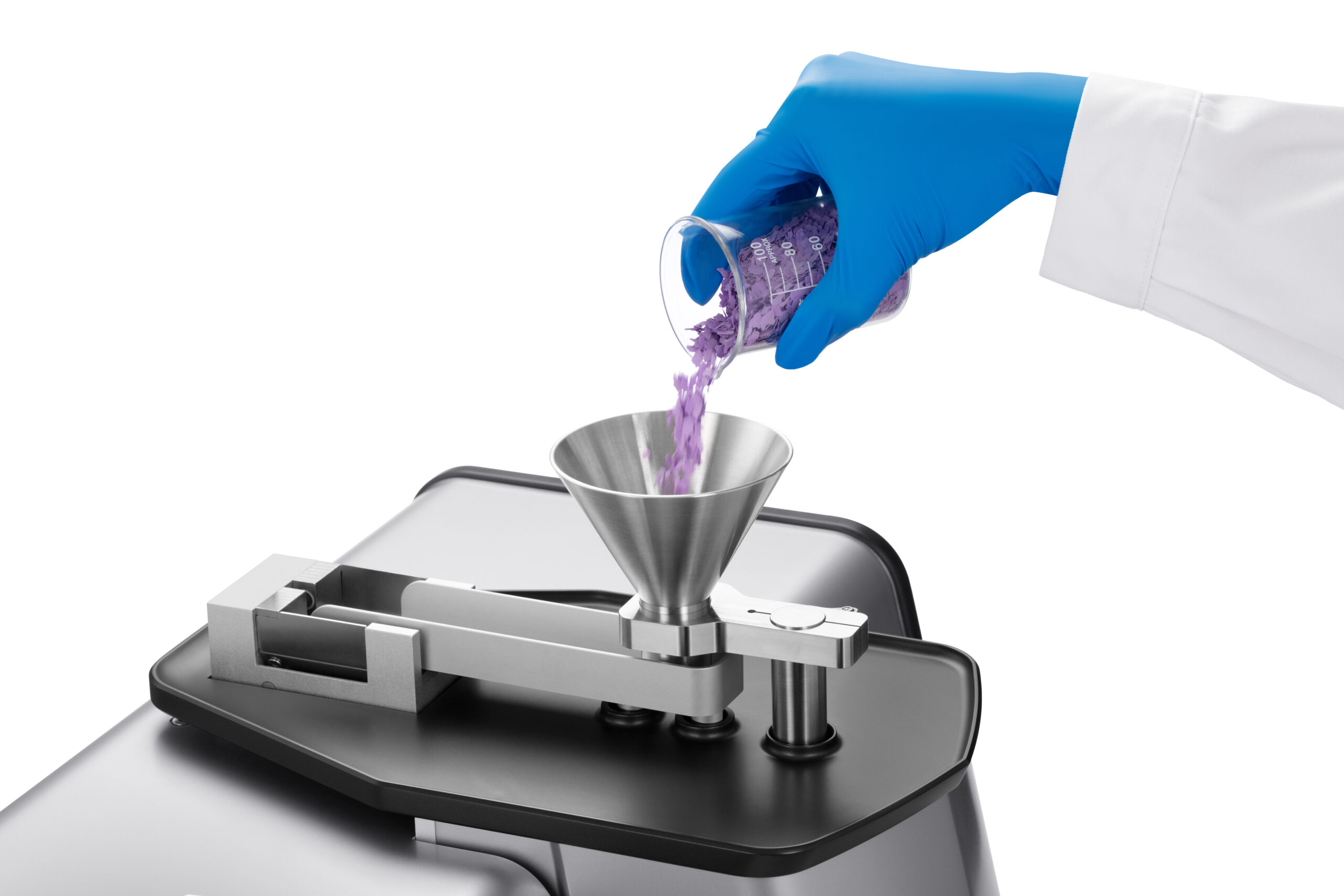
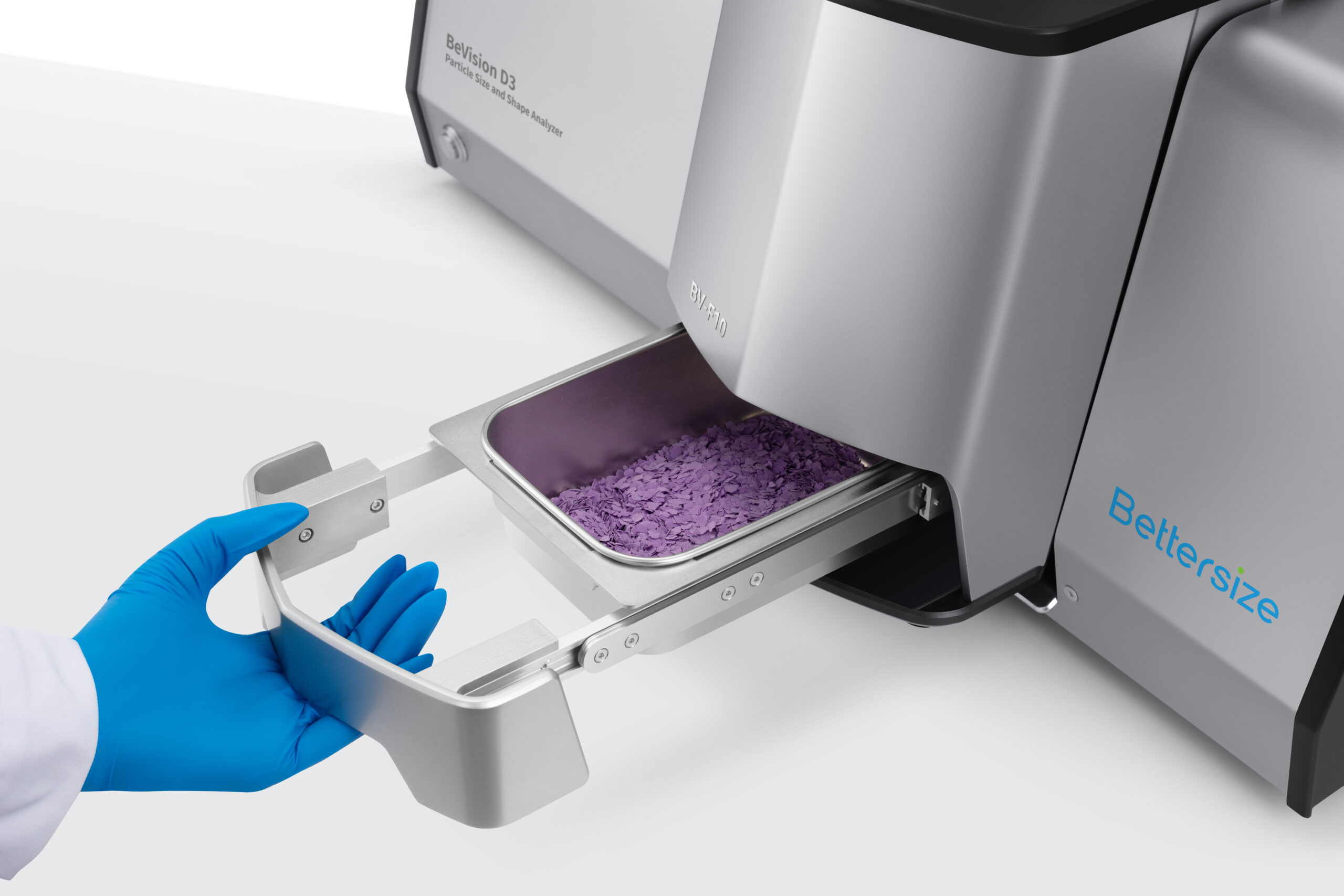
| Samples are loaded into the funnel, where particles are metered and conveyed by a vibrating chute. The particles then pass through adjustable guide slots and fall freely through the detection zone under gravity. After measurement, all particles are collected in the recovery tray, ensuring complete sample recovery |
Features & Benefits
- Fully software-controlled adjustments
Funnel height, chute feeding rate and guide slot spacing are adjustable automatically via software. - Optimized particle dispersion
The beveled chute end redirects particles for uniform dispersion across the detection zone. - Controlled particle flow thickness
Adjustable guide slots control particle flow thickness, minimizing out-of-focus and particle overlap. - Intelligent feeding rate control
The software dynamically regulates the feeding rate during measurement to ensure optimal dispersion, efficiency and repeatability. - 100% sample recovery
All particles are collected after measurement, making the system ideal for valuable or limited samples.
 BV-F10 BV-F10 |
Accessories of the BV-F10 |
|
 |
 |
|
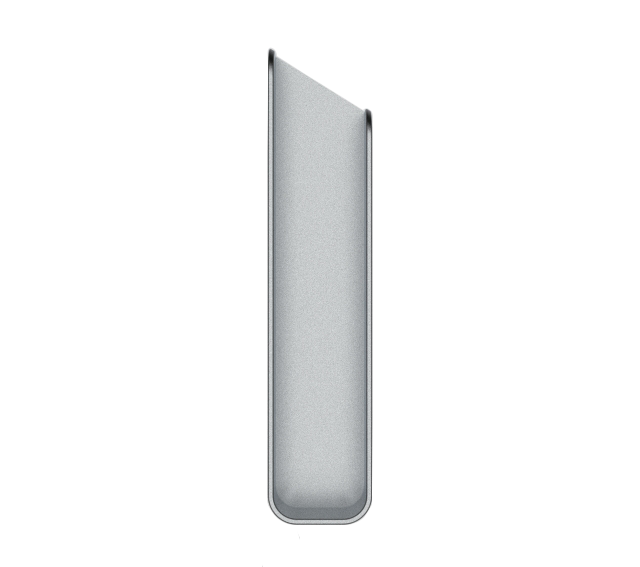
| Low-friction chute Designed for non-spherical and irregular powders |
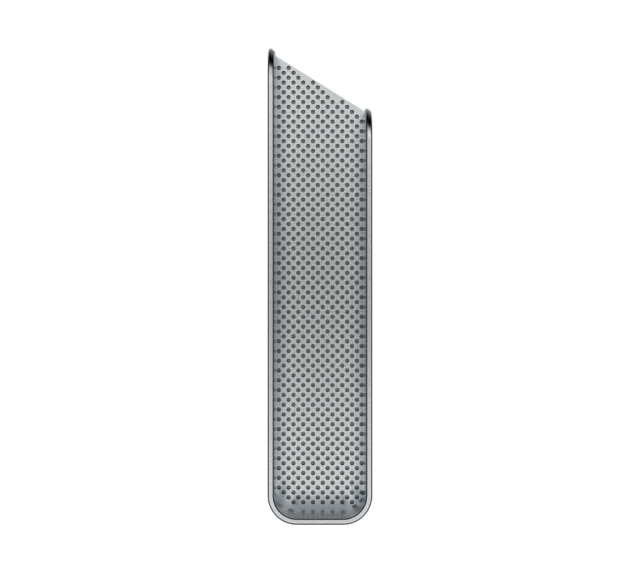
High-friction chute Optimized for spherical granules such as glass beads |
|
 |
 |
|
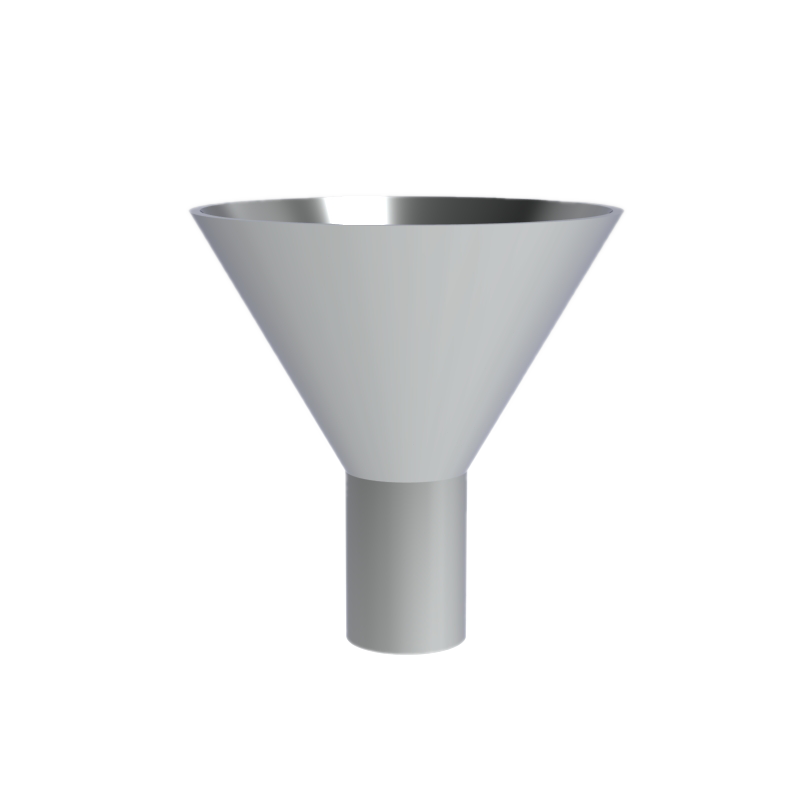
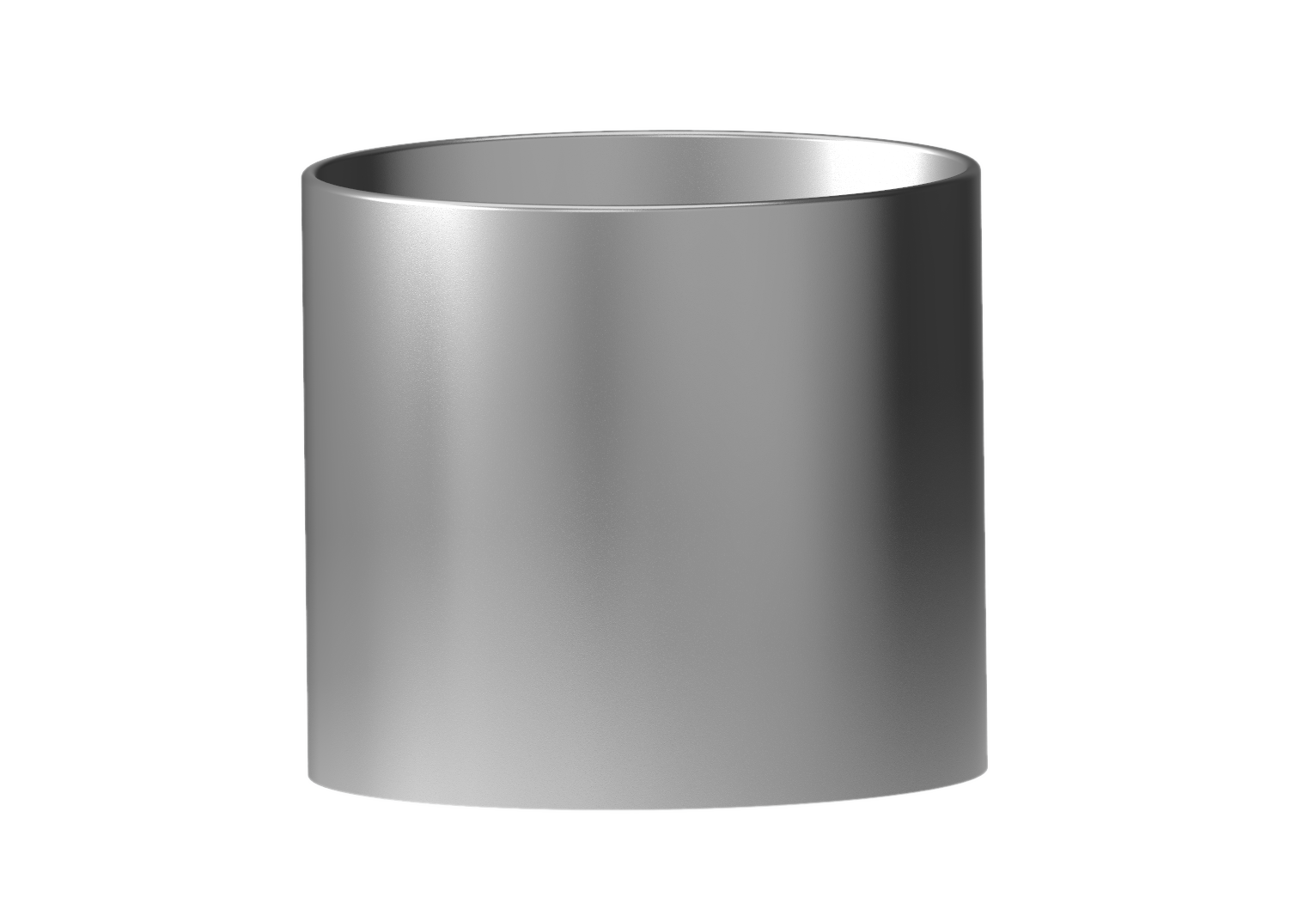
| 150 ml funnel | 450 ml funnel Expansion cylinder |
|
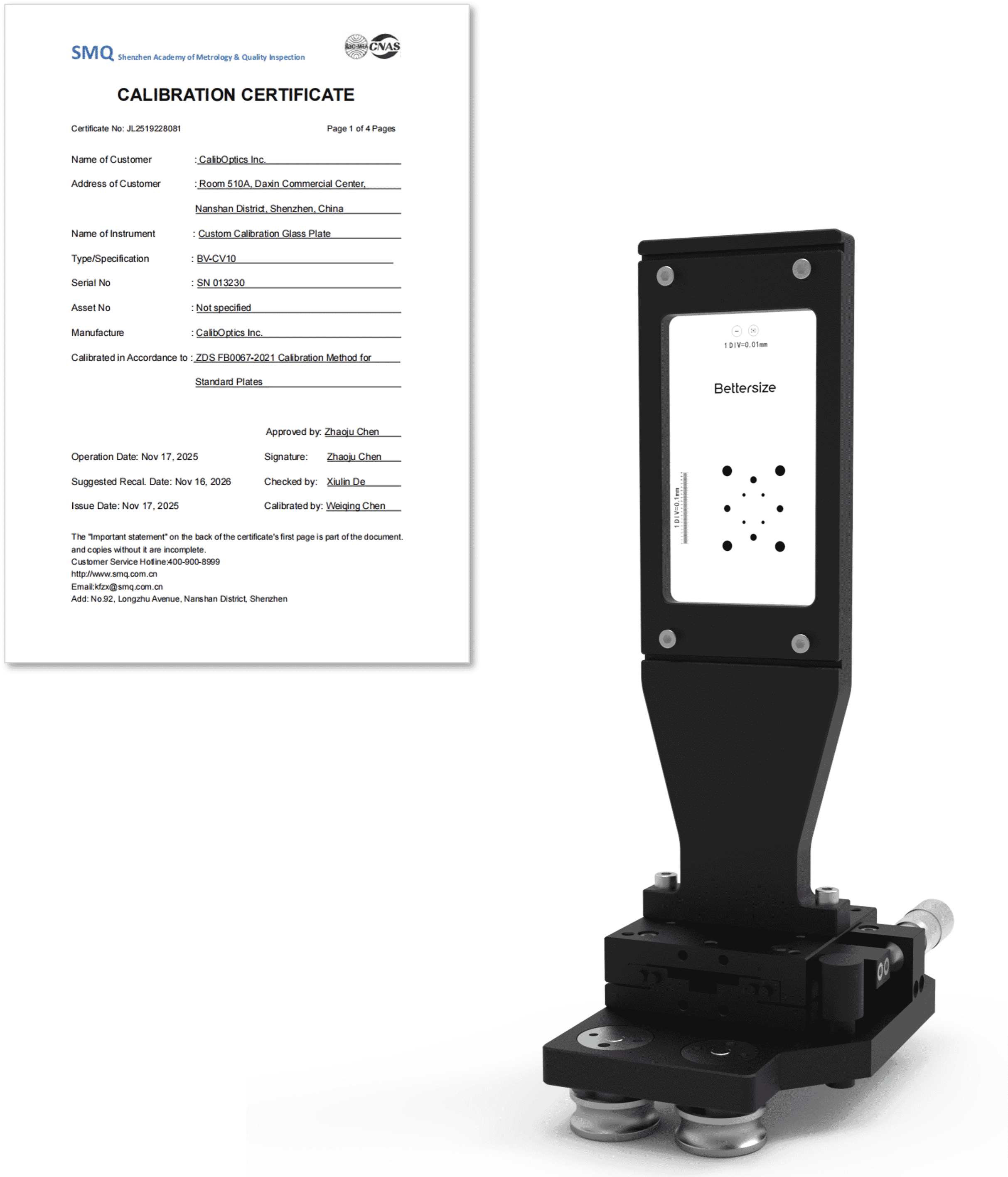
Specialized Calibration Unit
The Specialized Calibration Unit is designed for accurate calibration and verification of the DIA imaging system, ensuring long-term measurement reliability and compliance.
Features & Benefits
- 2-in-1 functionality
Used for both system calibration and performance verification. - Metrology-certified accuracy
Certified by the National Institute of Metrology, ensuring traceable and reliable results. - High precision
Measurement accuracy up to 1μm. - Simple and user-friendly operation
Quick setup and intuitive use for routine verification. - Automatic report generation
Software-generated calibration and verification reports support convenient annual verification and audit readiness.
Application
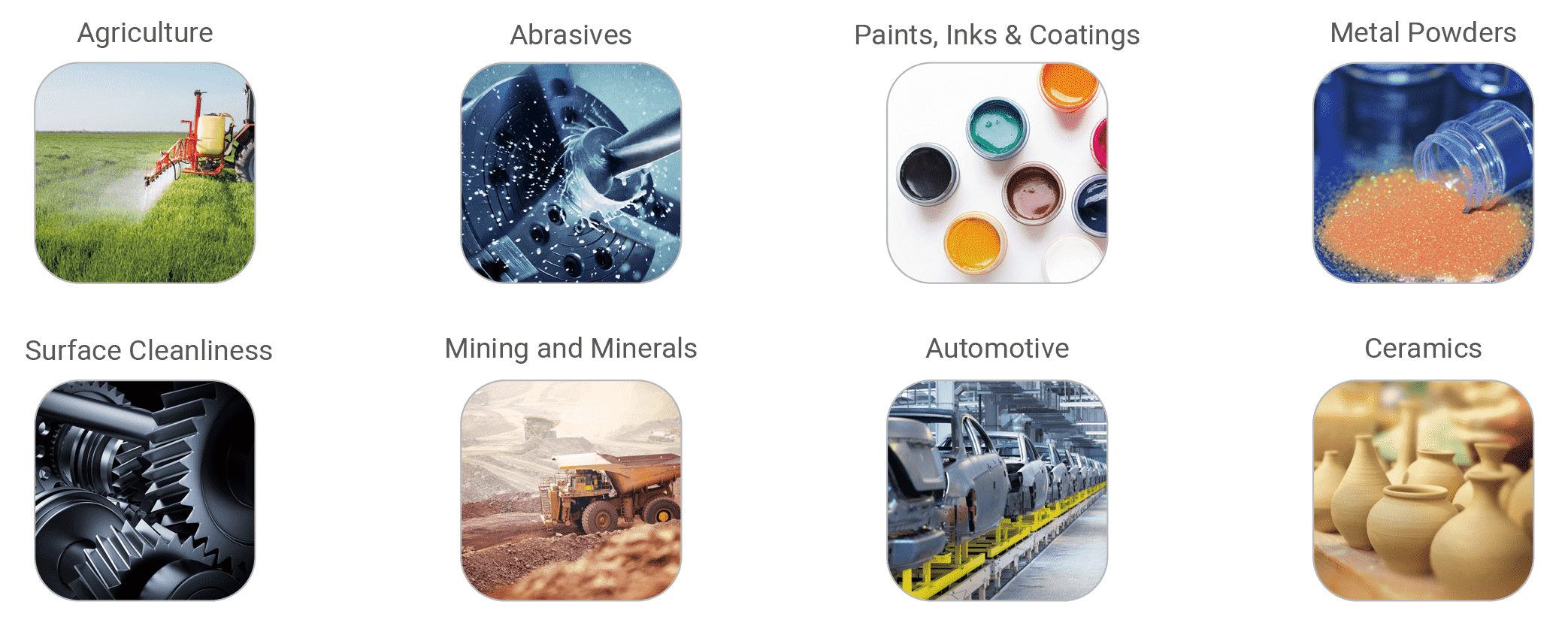
Typical Applications
Application Cases
Based on its wide measuring range, direct measurement principle, and broad compatibility with diverse sample types, the BeVision D3 Series can be widely used in many industries ranging from research to quality control, providing in-depth insights into particle analysis.
1. Excellent Repeatability
| Example: Glass beads | ||||
| Glass bead particles are characterized in terms of length, diameter, and curvature. The measurement results closely align with intuitive visual assessments, confirming the accuracy and relevance of DIA-based morphology analysis. | ||||
| D10 | D50 | D90 | 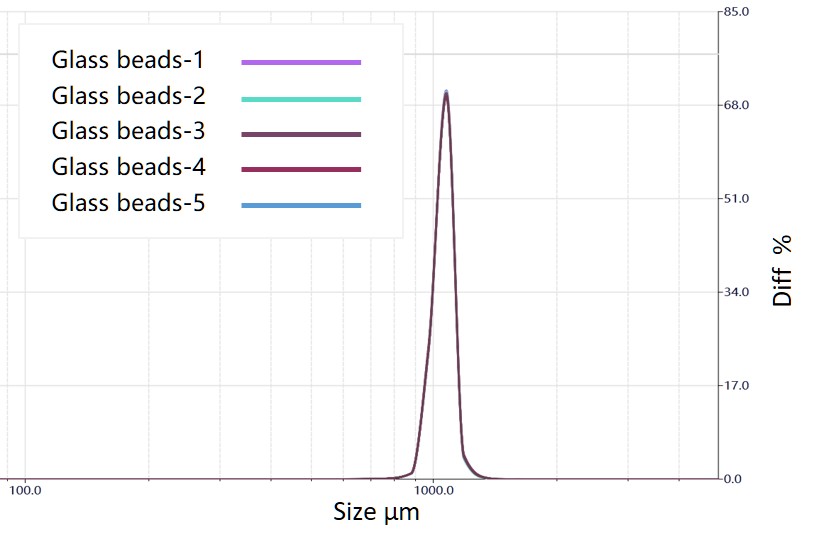 |
|
| Mean /μm | 994.74 | 1056.32 | 1112.13 | |
| Std. Dev /μm | 0.39 | 0.43 | 0.76 | |
| Repeatability | 0.04% | 0.04% | 0.07% | |
| Example: Cracked Soybeans | ||||
| Even for cracked soybean particles with wide size distributions and highly irregular shapes, the repeatability of D50 remains better than 0.5%, confirming reliable performance for real-world samples. | ||||
| D10 | D50 | D90 | 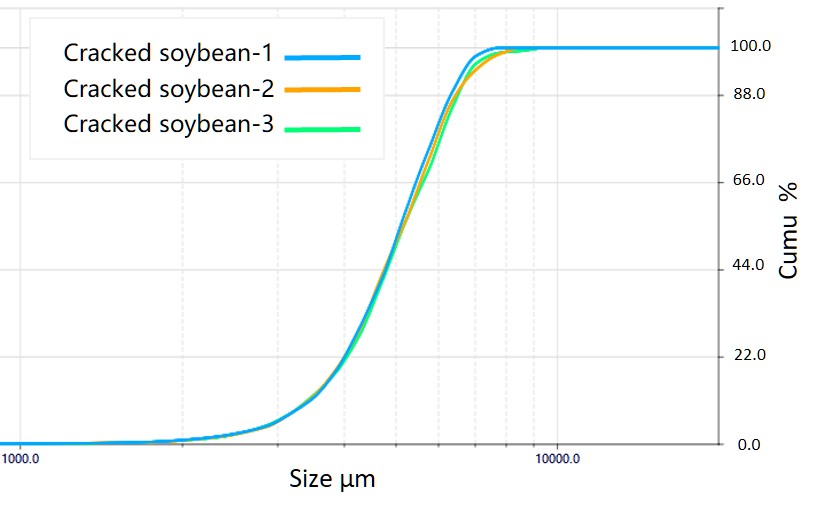 |
|
| Mean /μm | 994.74 | 1056.32 | 1112.13 | |
| Std. Dev /μm | 0.39 | 0.43 | 0.76 | |
| Repeatability | 0.04% | 0.04% | 0.07% | |
2. Comprehensive Particle Size & Shape Analysis
The BeVision DIA Software provides 37+ particle size and shape parameters, enabling thorough characterization and objective evaluation of diverse particle morphologies.
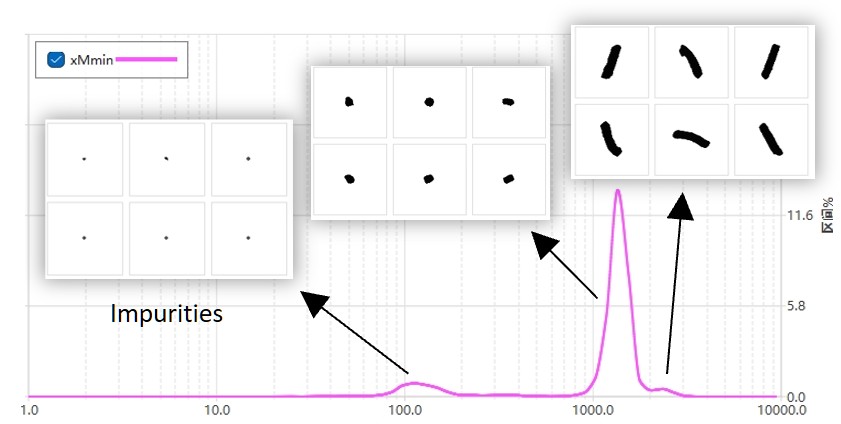
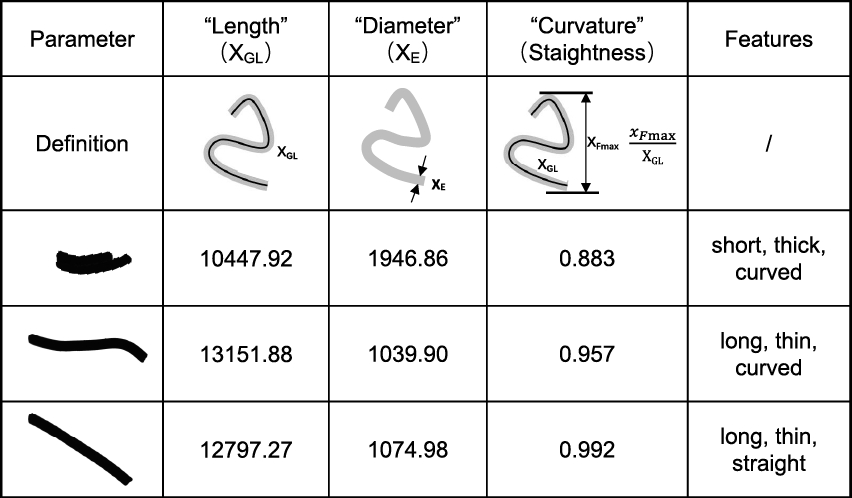
| Example: Petroleum catalyst | |
| Rod-like catalyst particles are characterized in terms of length, diameter, and curvature. The measurement results closely align with intuitive visual assessments, confirming the accuracy and relevance of DIA-based morphology analysis. | |
 |
 |
3. Accurate Determination of Low-Content Oversize Particles
By leveraging advanced digital imaging technology and highspeed image capture, BeVision D3 Series achieves ultra-high detection efficiency. Even oversize particles present at extremely low concentrations can be accurately identified and quantified.
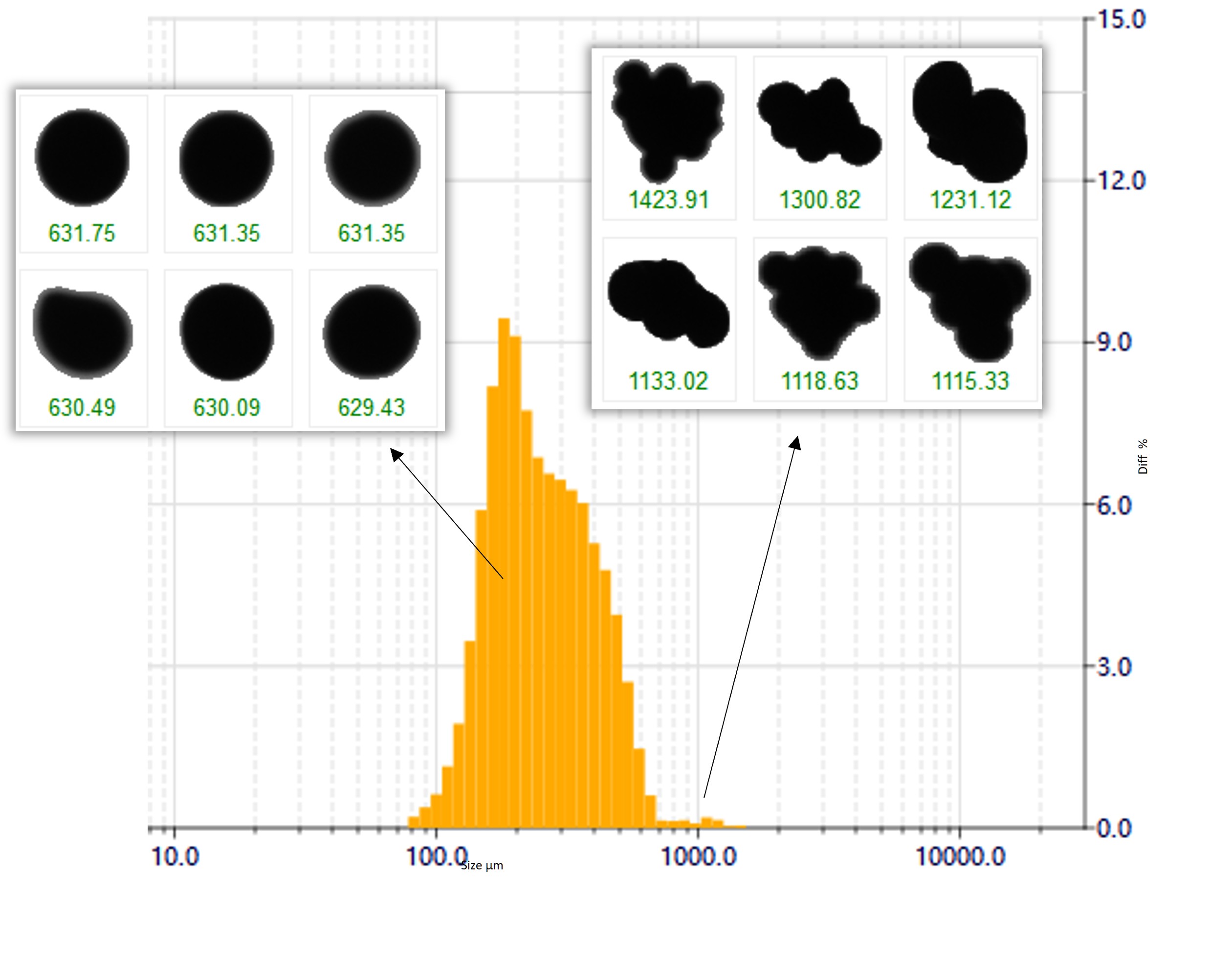
| Example: Colorants |
| Over 1 million colorant particles were analyzed within 6 minutes. The resulting size distribution revealed a small fraction of oversize particles, and captured images confirmed that each oversize particle was an agglomerate composed of multiple smaller colorant particles. |
 |
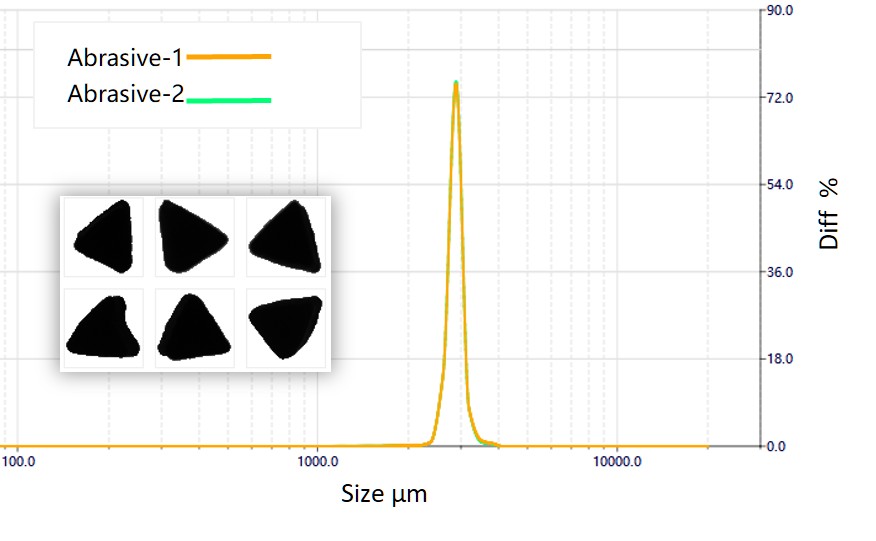
4. Ultra-High Resolution for Narrow Distributions
The BeVision D3 Series analyzes every individual particle captured during measurement and performs statistical analysis across the full particle population, achieving single-particle resolution.
| Example: Abrasives |
| In abrasive materials, both oversize and undersize particles can negatively affect grinding performance. The BeVision D3 Series precisely quantifies the content of oversize and undersize particles, while also providing particle shape analysis to evaluate abrasive sharpness. |
 |
5. Mixture Analysis
The BeVision DIA Software is a powerful data analysis platform that enables separation and analysis of mixed particle systems. Particle mixtures can be classified and filtered based on size, shape, or multiple parameters, allowing each fraction to be analyzed independently within a single dataset.
| Example: Beans |
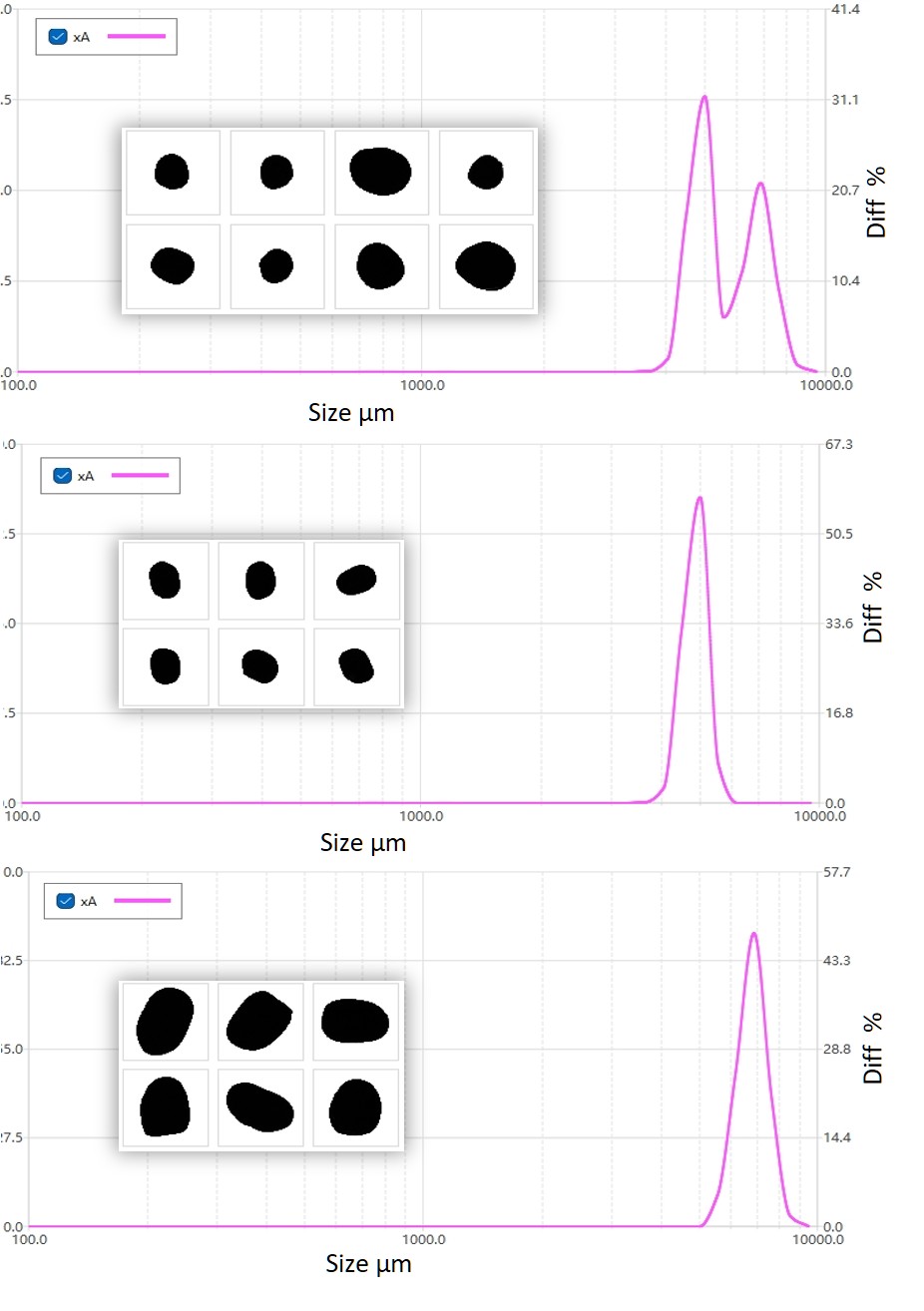 |
| Direct measurement of mixed beans produces a bimodal particle size distribution (PSD). The smaller peak corresponds to mung beans, while the larger peak represents red beans. By applying size-based filtration, the software separates red beans and mung beans from the mixed dataset, enabling independent analysis of each component without additional measurements. |
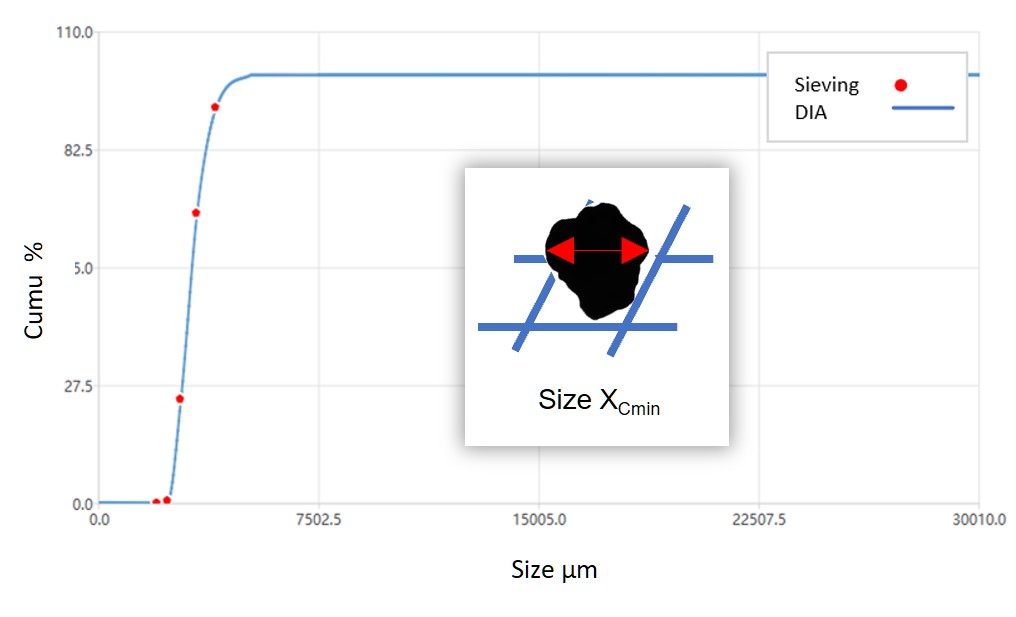
6. Fully Comparable with Sieving Results
The BeVision D3 Series uses a sieve-equivalent diameter aligned with the fundamental principles of sieving, delivering particle size distributions (PSD) that are highly consistent with traditional sieve analysis. Its dedicated sieve correlation function automatically compensates for systematic differences related to measurement principles, particle shape and statistical effects, and directly outputs sieving-correlated PSD results.
| Example: Fertilizer |
| PSDs measured by the BeVision D3 show excellent agreement with sieve analysis results. Users can switch seamlessly from mechanical sieving to the BeVision D3 system, significantly improving testing efficiency while reducing labor costs. |
 |
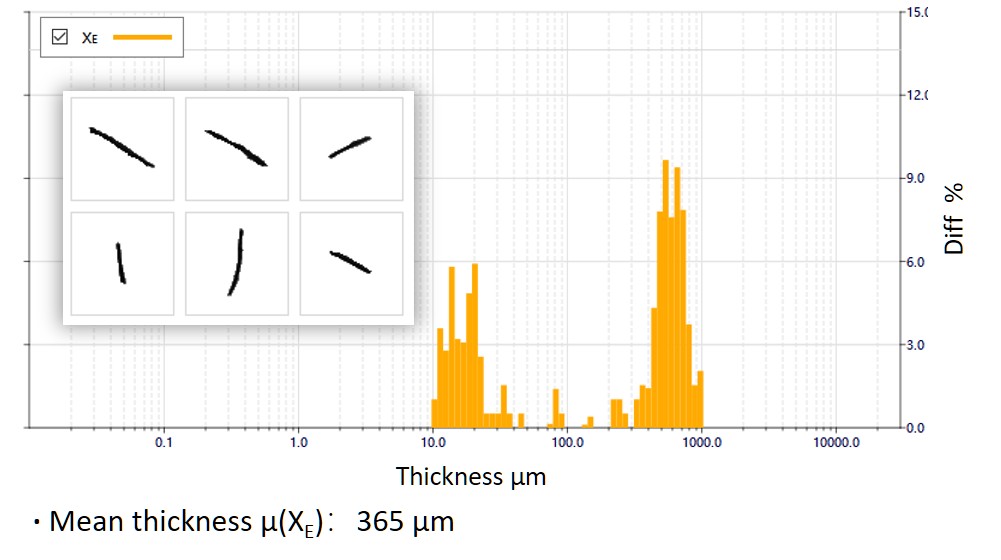
7. Thickness Measurement of Flaky Particles
The BeVision D3 Series is capable of capturing crosssectional images of flaky particles during measurement, enabling automatic and direct thickness measurement.
| Example: Soybean meal |
| The thickness of the flaky soybean meal residue after pressing directly reflects the residual oil content. Conventional thickness measurement relies on manual caliper measurements of individual particles, resulting in extremely low efficiency and poor representativeness. The BeVision D3 system automatically measures and outputs the thickness distribution and mean thickness, significantly improving measurement efficiency, repeatability, and statistical reliability |
 |
Specification
| Parameter | BeVision D3 | BeVision D3 Macro | BeVision D3 Pro |
| Measurement Principle | DIA | DIA | DIA |
| Optical System | Single-lens system | Single-lens system | Dual-lens system |
| Measurement Range | 11.5 μm — 16 mm | 20 μm — 26 mm | 0.5 μm — 16 mm |
| CMOS Camera | 5 megapixels | 5 megapixels | 5 megapixels per camera |
| Light Source | Green parallel planar light | Green parallel planar light | Basic system: green parallel planar light Zoom system: blue light |
| Repeatability (D50 of standards) | ≤ 0.5 % | ≤ 0.5 % | ≤ 0.5 % |
|
Result Output Format
|
Charts: Excel / TXT / JPG / BMP Reports: PDF / Excel | ||
|
Recommended Sample Amount
|
< 20 mg – 200 g (sample type dependent) | ||
|
Typical Test Time
|
3 minutes (sample dependent) | ||
|
Dimensions (L × W × H)
|
686 mm × 300 mm × 325 mm | ||
|
Weight
|
24 kg | ||
|
Power Supply
|
100-240 VAC, 50/60 Hz | ||
|
Conformity
|
ISO 13322-2, ISO 9276 | ||
|
Computer Configuration
|
Intel ® Core™ i9 (14th gen), 32 GB RAM, 64-bit Windows 11, 1 TB SSD | ||
|
Accessories of the BV-F10
|
|||
|
Funnels
|
150 ml stainless steel funnel, 450 ml stainless steel funnel expansion cylinder | ||
|
Chutes
|
High-friction stainless steel chute, low-friction stainless steel chute | ||